Shoreline: designing ecological marine interventions through nonhuman agency
Coached by: Doenja Oogjes
Conducted at: Eindhoven University of Technology
2026
Keywords: More than human-centered design, Speculative design, Research through design, Regenerative design, Acoustic ecology, Ceramics, Autoethnography.
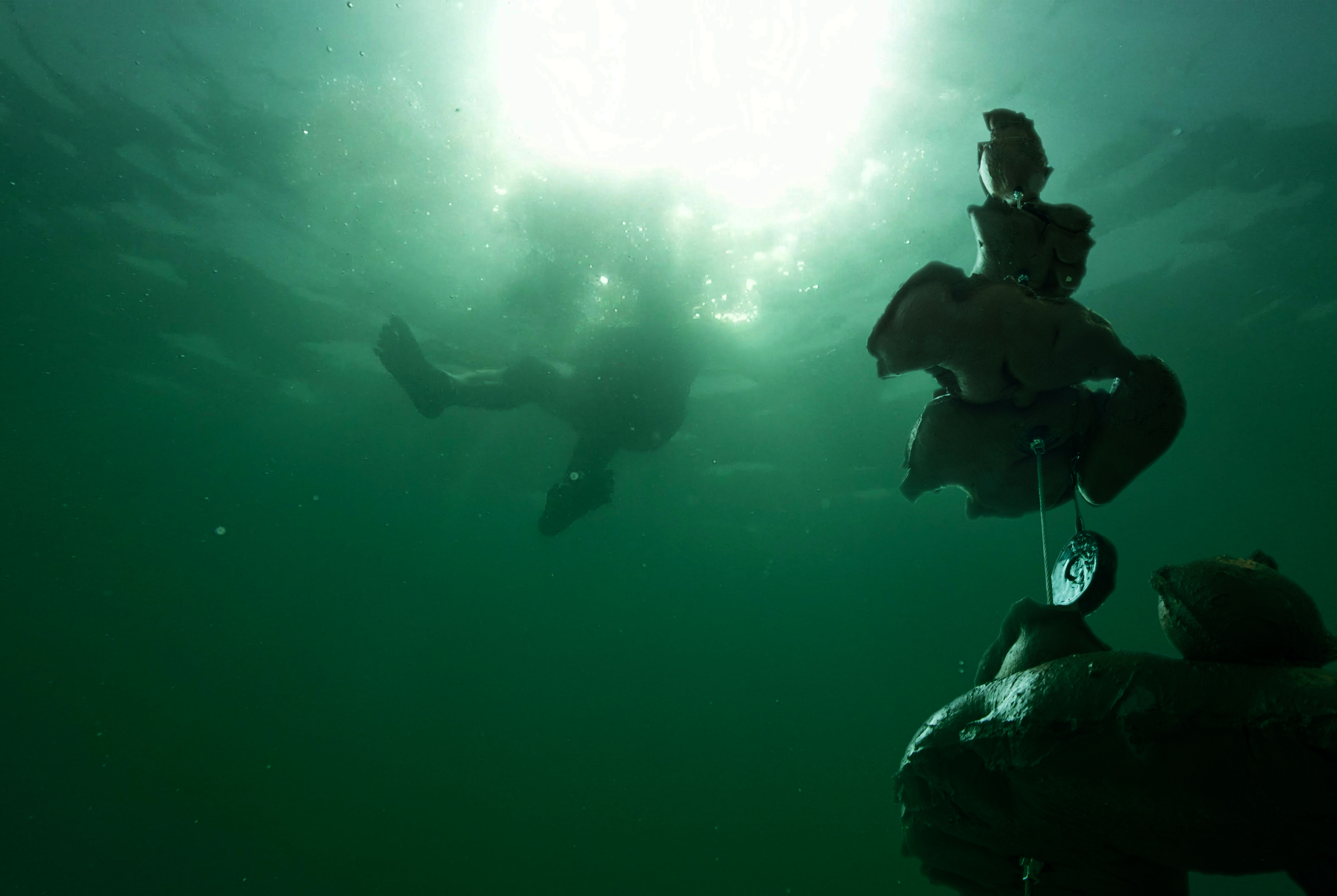
Shoreline is a marine ecological intervention designed to help seaweed and benthic organisms repopulate the Baltic Sea dead zones. The installation consists of buoyant clay platforms that are tethered to the seafloor. These platforms offer ground space above the deoxygenated seafloor, on which organisms can settle. The ecological culture change is monitored through acoustic ecology. A built-in hydrophone records a full spectrum soundscape, which can be dissected, or compared to the soundscapes of similar ecologies.
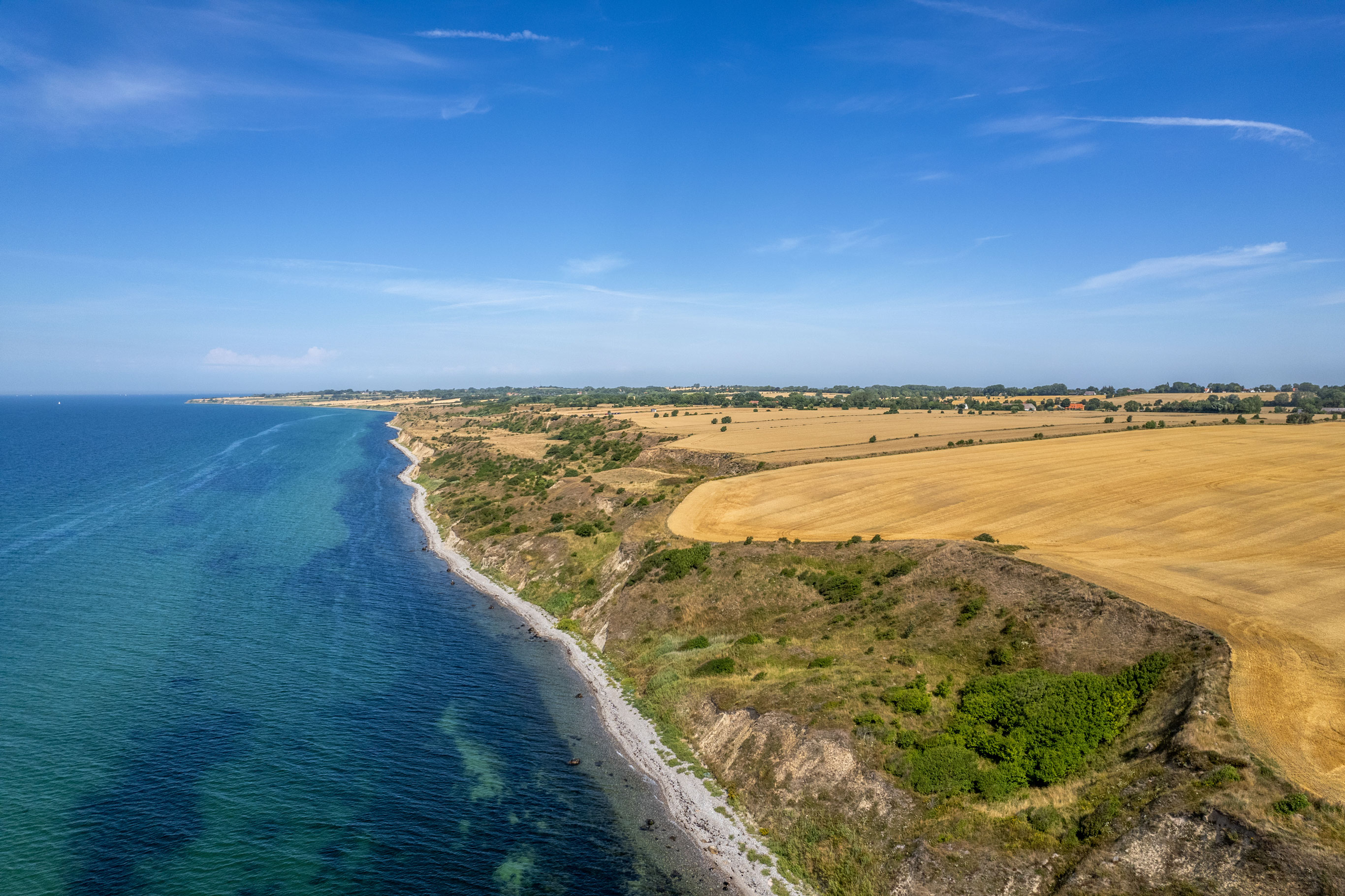
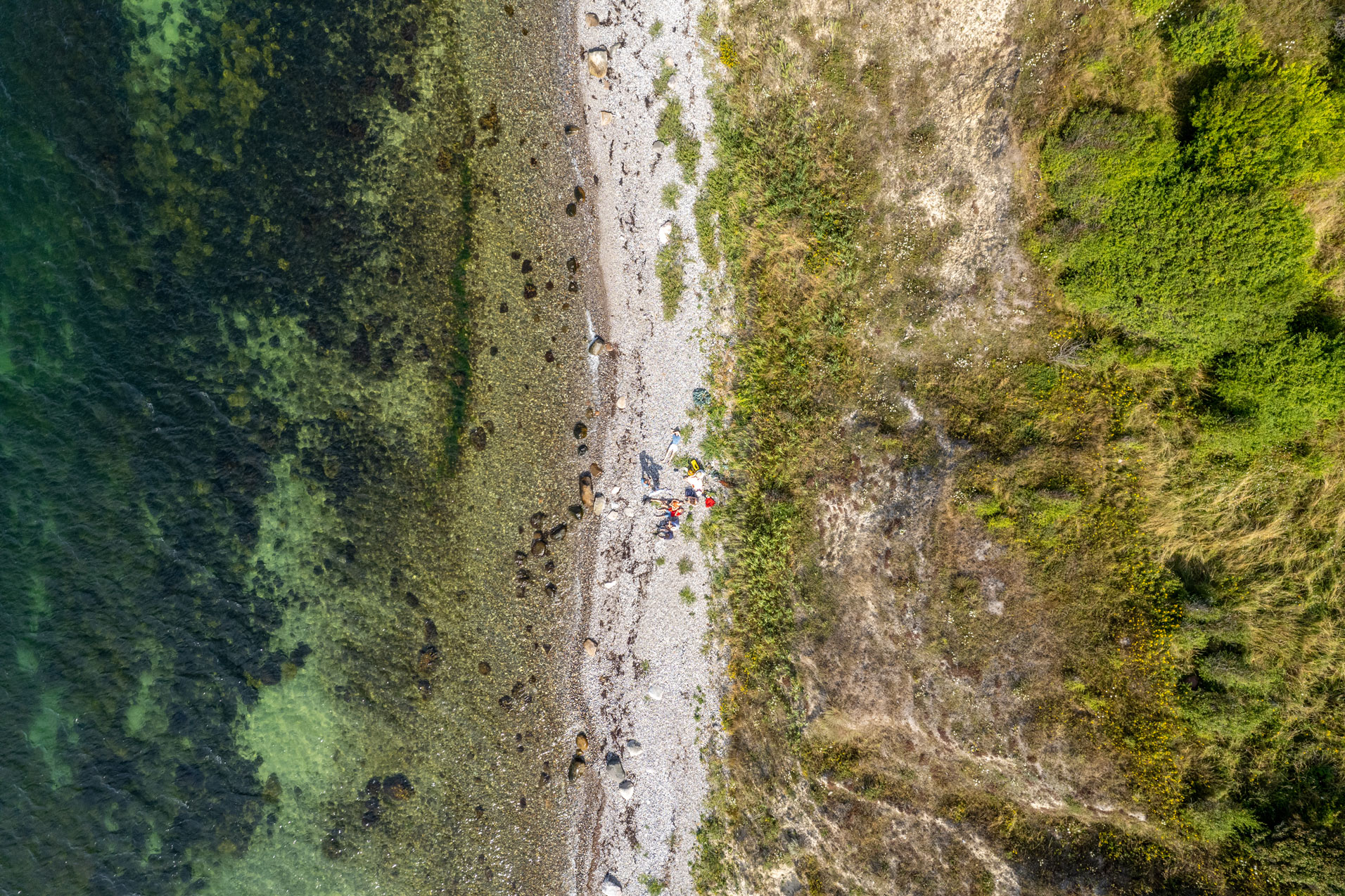
Agriculture adjacent to the shore. Water, carrying nutrients, washes down onto the beach into the sea.
Dead zones
Dead zones are patches of water, deoxygenated to the extent that marine life is unsustainable. In the Baltic Sea the dead zones are caused mainly by the runoff from agricultural nutrients. The oversaturated water is overgrown by algae which blot out the sun. Eventually the algae die, sink to the seafloor, and decompose, using all available oxygen. In a vicious cycle, the seaweed disappears, removing further oxygen. The many creatures dependent on seaweed consequently also vanish, leaving desolate seafloor: A dead zone.
Vitrification
The platforms are made from clay found on the shore. By heating the clay above its conventional firing temperature, vitrification occurs. Vitrification causes the surface of the clay to melt, turning its surface into glass. The clay loses its porosity and bloats, changing the volume and becoming buoyant. The internal gases expand forming chambers that are exposed when the piece gets damaged.
The platforms are tethered to the seafloor by braided metal wire. The buoyancy of the vitrified clay keeps the structure upright, whilst still allowing the structure to sway in the current.
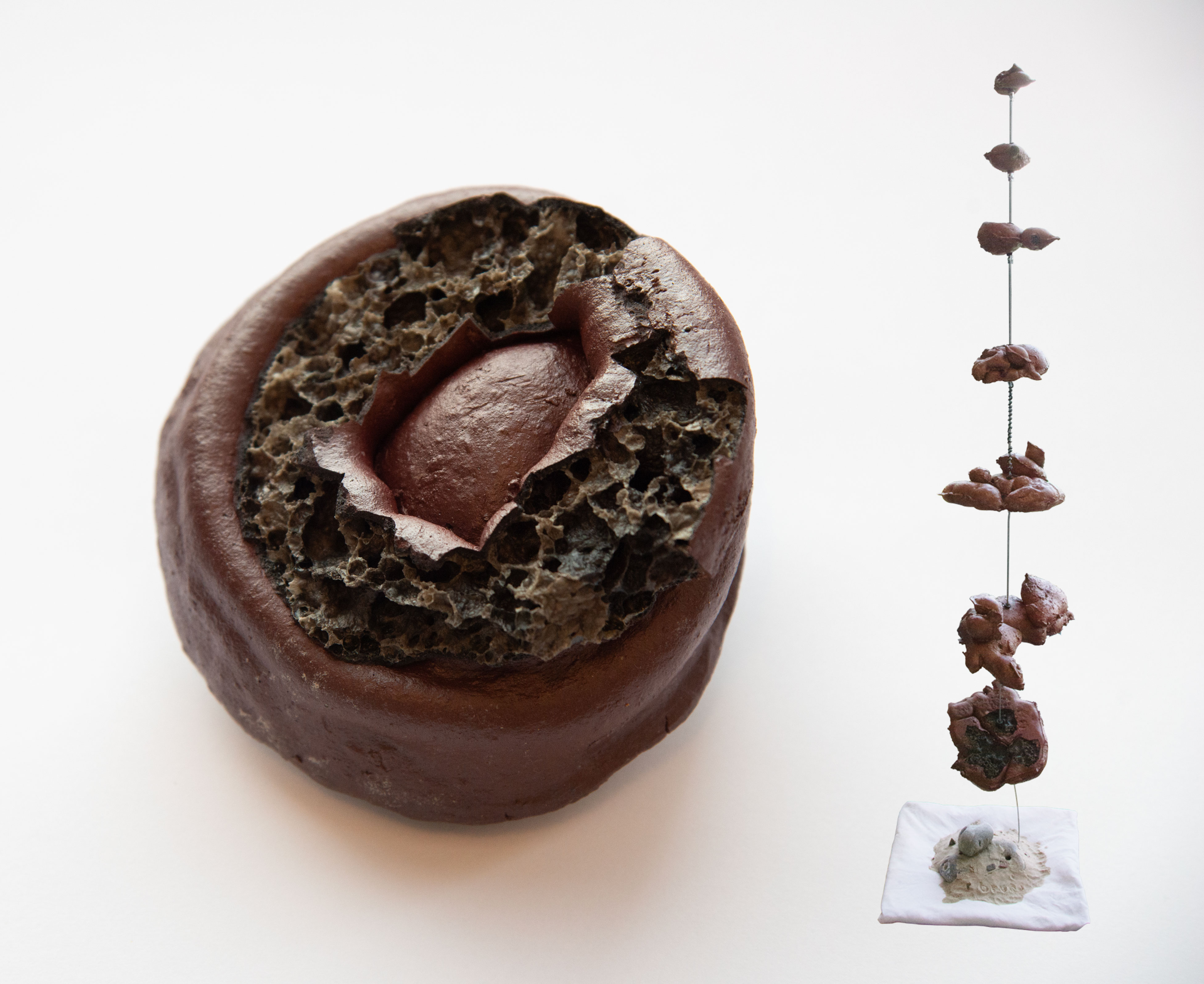
Left: A vitrified sample of clay. The sample bloated to three times its original size. Right: A line of vitrified platforms.
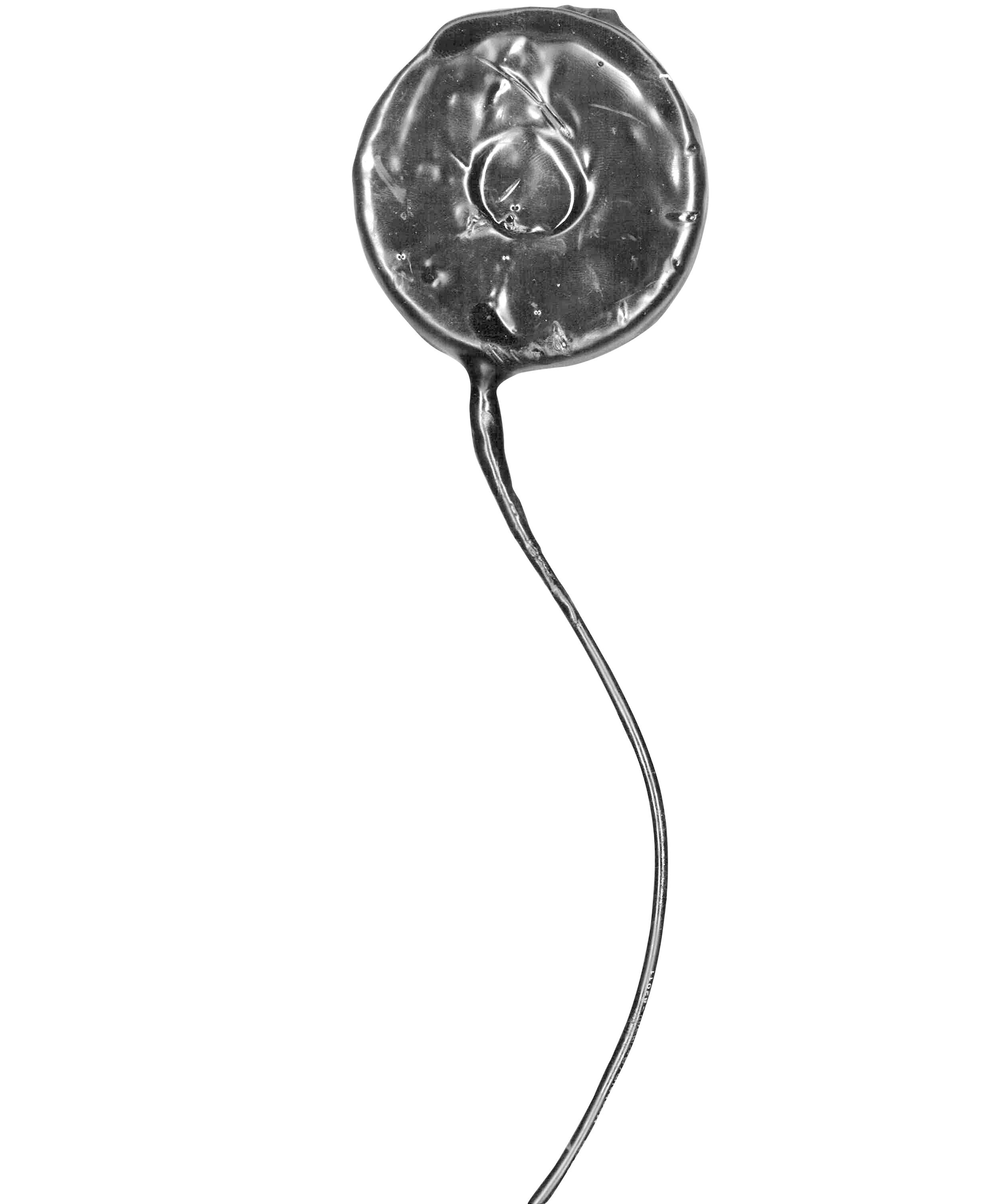
The prototype hydrophone made from a silicone cast piezoelectric disk element
Acoustic Ecology
To monitor the ecology inhabiting Shoreline, the tether is equipped with a hydrophone. The structure records a full spectrum soundscape of the surrounding area. Movement, communication, and chemical processes create distinct sounds. By transcribing the recording into a spectrogram, the sounds take visual forms as patterns on a ribbon. This ribbon can either be dissected against isolated recordings of its organic parts or be compared to other ecological soundscapes.
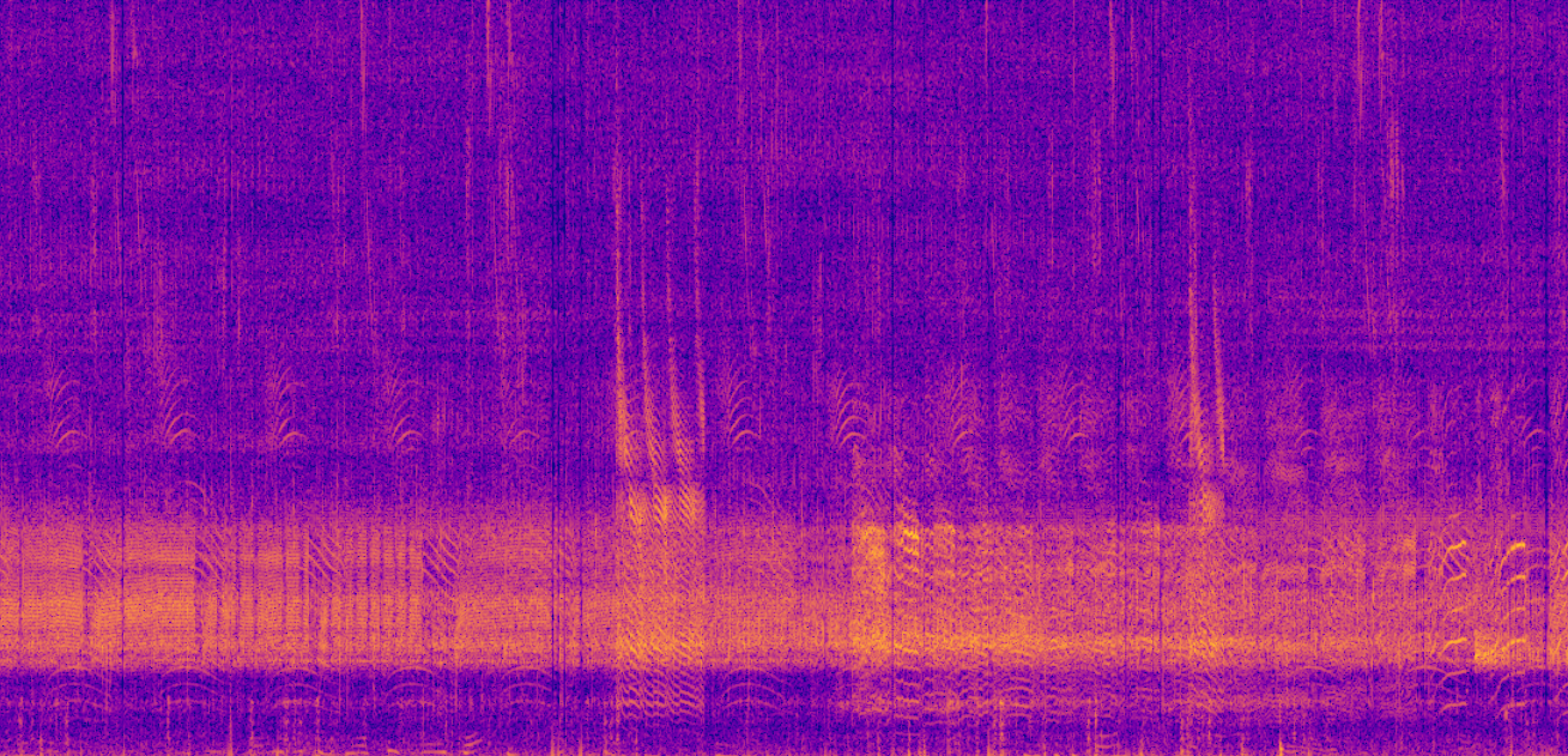
A spectrogram of a pond with several frogs croaking. There are several sinusoidal audio patterns repeating throughout the recording.